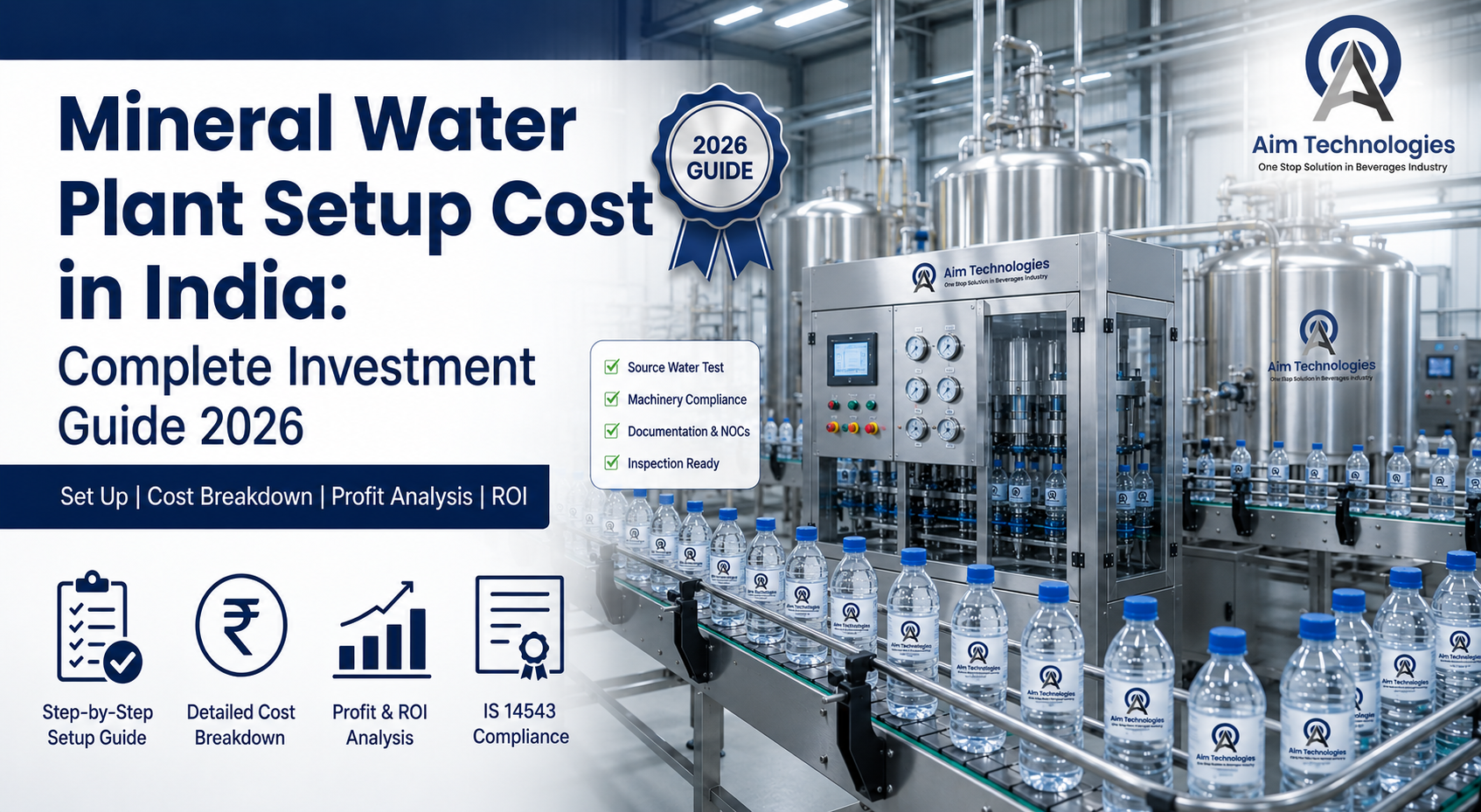
If you've been researching the Mineral water plant setup cost in India for a while now, you've probably noticed something frustrating — most of the information online either gives you a single vague number or a sales pitch dressed up as a guide. Neither actually helps you plan.
So let's talk about this the way it deserves to be discussed. Honestly, practically, and with enough detail that you can walk away from this article with a realistic picture of what you'll need to invest.
Setting up a packaged drinking water plant in India is genuinely a viable business opportunity in 2026. Demand is only going up. The market is growing at over 20% annually in several Tier-2 and Tier-3 cities. But the investment required — and how you structure it — will depend on a set of variables that are unique to your situation. Getting those variables right from the beginning is what separates a plant that runs profitably from one that bleeds money in the first year.
This guide covers everything: land costs, machinery investment, licensing fees, labour, electricity, and the realistic total range you're looking at for different scales of operation. By the end, you'll have a clear enough picture to take the next step — whether that's getting a formal quote, approaching a bank, or applying for a government subsidy.
Before getting into numbers, it's worth being clear about what a mineral water plant actually is. In India, the term 'mineral water plant' is commonly used to mean a packaged drinking water (PDW) plant — a facility that purifies water through reverse osmosis (RO), treats it further with UV and ozone, and then fills it into bottles that carry the ISI mark under BIS certification (IS 14543).
True 'natural mineral water' (IS 13428) is a separate, more niche category. Most entrepreneurs starting in this space are setting up packaged drinking water plants, not natural mineral water plants — and that's what this guide primarily addresses.
'Setup cost' means the full capital investment required to get your plant operational and legally compliant — not just the machinery cost. That distinction matters a great deal, and we'll break down every component below.
This is where most guides fail you — they give you a single number without explaining why that number varies. The honest answer is that your total mineral water plant cost depends on several factors working together:
This is often the component that surprises first-time investors most. Land cost in India's industrial areas ranges from a few hundred rupees per square foot in smaller towns to several thousand in major metros. A small-scale packaged drinking water unit needs at minimum 1,500 to 2,000 square feet of covered factory space — and that's tight. A mid-scale unit needs 3,000 to 5,000 sq ft, with adequate space for a production floor, an in-house laboratory (BIS requires this), storage, and a loading area.
If you're buying land outright, budget accordingly based on your state's industrial area rates. Many smart entrepreneurs — especially when starting out in 2026 — choose to lease a factory shed instead. Monthly rental in a Tier-2 city industrial area for 2,000 sq ft runs roughly ₹25,000 to ₹60,000 depending on location and facilities.
Civil work — flooring, drainage, plumbing, electrical infrastructure for industrial-grade power supply — for a new plant typically runs between ₹8 lakh and ₹25 lakh depending on size and condition of the premises. This is not optional. BIS inspection specifically checks your factory layout, drainage, and hygiene infrastructure.
The reverse osmosis system is the backbone of any packaged drinking water plant. It's also one of the most variable cost components because its capacity and configuration depend directly on your source water quality and your production target.
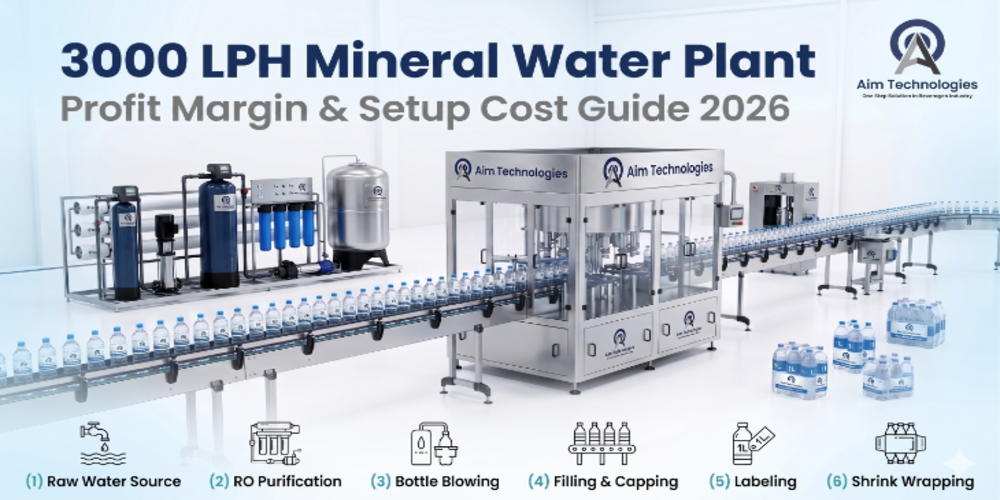
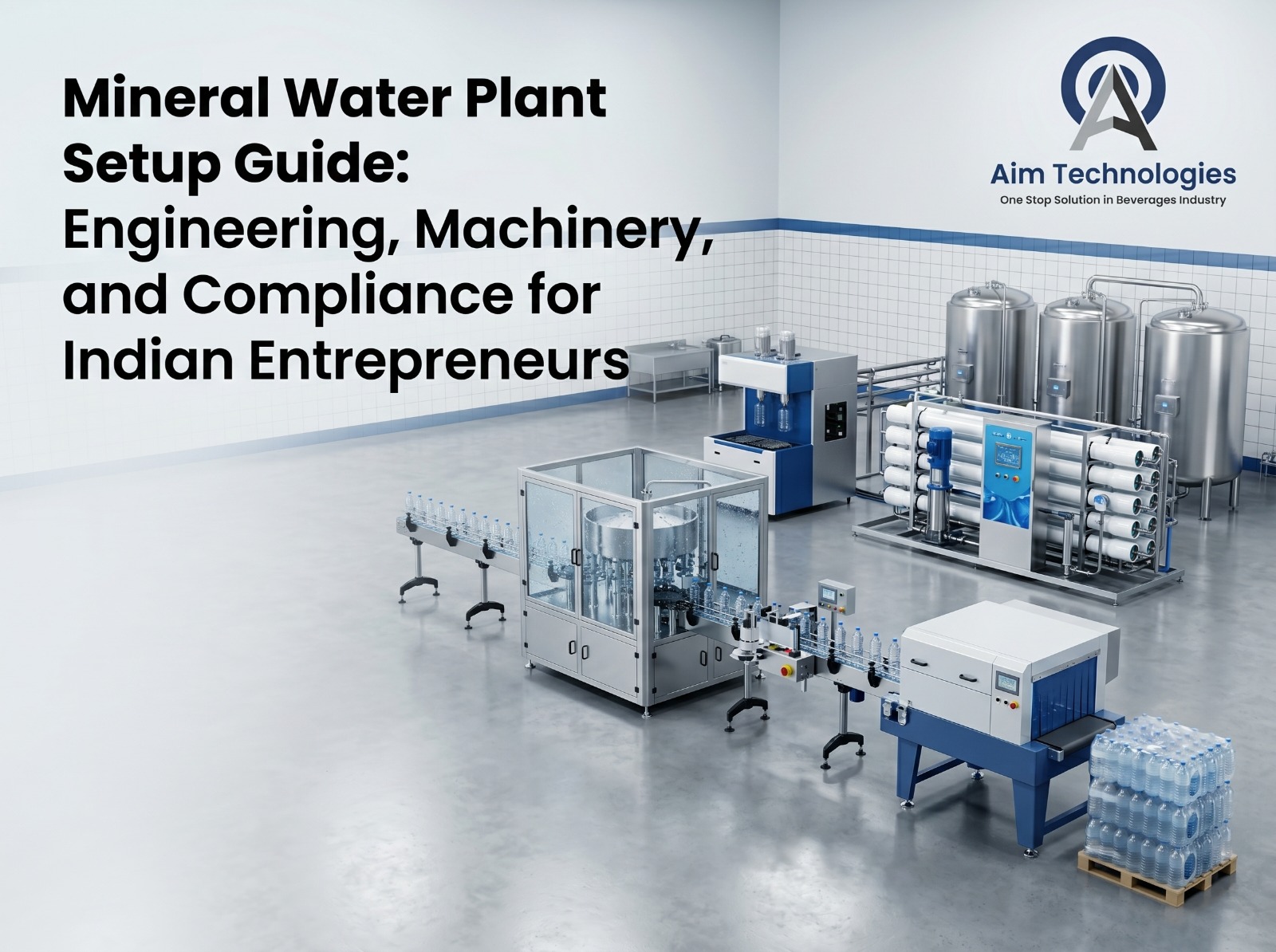
An RO plant for a mineral water business doesn't work in isolation. The full treatment chain typically includes raw water storage, a sand filter, an activated carbon filter, a water softener (if needed), the RO membrane assembly, a UV sterilisation unit, and an ozone generator. Each of these serves a specific purpose, and skipping any stage to reduce cost often creates compliance problems at the BIS inspection.
For small-scale operations producing up to 2,000 to 3,000 litres per hour, a complete RO treatment system from a reliable manufacturer typically runs in the range of ₹4 lakh to ₹10 lakh. For mid-scale operations in the 5,000 to 10,000 litres-per-hour range, you're looking at ₹10 lakh to ₹18 lakh. High-capacity commercial systems for large plants go up to ₹24 lakh and beyond, depending on output volume and treatment complexity.
Investing in a properly sized RO plant from day one — rather than undersizing it and expanding later — is significantly more cost-efficient in the long run. An undersized RO system becomes a production bottleneck the moment your filling line runs at full capacity.
This is a decision point that every new water plant owner faces: do you manufacture your own PET bottles on-site, or do you source pre-formed bottles from an external supplier?
Manufacturing your own bottles gives you several real advantages — you control bottle quality and design, you eliminate the logistics cost of storing thousands of empty bottles, and you reduce the contamination risk that comes with pre-stored bottles. The trade-off is the upfront water plant machinery cost.
A semi-automatic PET blowing machine suited to a small-scale plant — producing around 500 to 800 bottles per hour — starts at roughly ₹9 lakh to ₹15 lakh. A fully automatic single-cavity or twin-cavity machine for mid-scale operations runs in the ₹20 lakh to ₹45 lakh range. High-speed fully automatic multi-cavity blow moulding machines for large commercial plants can go up to ₹1 crore depending on output capacity and bottle size range.
If you're starting small with limited capital, sourcing bottles externally is a workable short-term approach. But most serious plant operators bring bottle production in-house once their daily volumes justify the investment — typically within 12 to 24 months of launch.
The Water filling machine handles rinsing, filling, and capping in a sealed, hygiene-controlled environment. This is a non-negotiable BIS requirement — the enclosed filling process is what prevents contamination between the treatment stage and the sealed bottle.
A basic semi-automatic filling machine for small operations (producing roughly 1,000 to 1,500 bottles per hour) typically starts from around ₹8 lakh. A mid-range automatic filling machine capable of 3,000 to 5,000 bottles per hour runs in the ₹18 lakh to ₹32 lakh range. High-speed automatic systems for large plants can reach ₹45 lakh and above, depending on output speed and bottle type compatibility.
The right labeling machine depends on your bottle shape and label type. Round water bottles use a round sticker labeling machine. If you're doing front-and-back labels or BOPP film labels, you need a different configuration. Shrink sleeve labels require a dedicated applicator.
Entry-level labeling machines for small operations start from around ₹3 lakh. Mid-range automatic labeling machines for standard production speeds run between ₹5 lakh and ₹8 lakh. High-speed labeling systems with multi-format capability go up to ₹11 lakh and above.
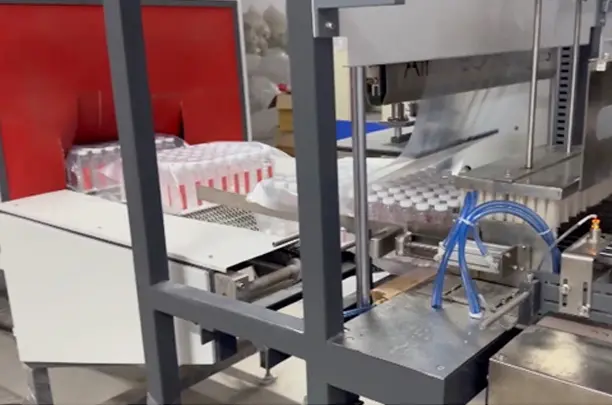
This is one component that often gets underbudgeted. The shrink wrapping machine handles the grouping of bottles into retail multipacks — and for BIS-certified packaged drinking water, the outer shrink wrap on a multipack serves as tamper evidence, which makes it a compliance requirement, not just a packaging choice.
A semi-automatic shrink wrapping machine for lower production volumes starts at approximately ₹3.5 lakh. Mid-scale automatic machines for continuous production runs between ₹10 lakh and ₹18 lakh. High-speed linear shrink wrapping machines for large commercial plants can go up to ₹30 lakh.
Every packaged drinking water bottle sold in India must carry a batch code, manufacturing date, and expiry date — this is both a BIS and FSSAI requirement in 2026. A reliable batch coding machine is a small but essential investment. Inkjet batch coding machines for packaged water plants start from around ₹2 lakh. More advanced systems with higher-speed printing capability run up to ₹10 lakh. Don't skip this — inspectors specifically look for it.
A small-scale mineral water plant in 2026 typically requires 5 to 8 people to run efficiently — including machine operators, a quality control person (a qualified chemist or microbiologist, as required by BIS), packaging staff, and a supervisor. In most Tier-2 and Tier-3 cities, monthly labour cost for this team runs between ₹1.5 lakh and ₹3 lakh.
BIS certification requires your in-house laboratory to be operated by qualified personnel. Trying to cut costs here by hiring unqualified staff is one of the most common reasons plants fail their BIS inspection or face compliance issues during renewal audits.
A mid-scale packaged drinking water plant consumes roughly 15 to 30 kW of connected load depending on the machinery configuration. Monthly electricity costs vary significantly by state — power tariffs for industrial units differ considerably between Gujarat, Uttar Pradesh, and Tamil Nadu. Budget for a monthly power bill of ₹25,000 to ₹70,000 depending on your scale and location.
If you're setting up in an area with unreliable grid power, factor in the cost of a generator backup — unplanned downtime in a bottling plant is expensive and can cause BIS compliance issues if it affects your water treatment cycles.
Compliance costs are real and need to be budgeted for upfront. Here's a realistic breakdown for 2026:
| Licence / Certification | Approx. Cost Range | Notes |
|---|---|---|
| BIS Certification (IS 14543) | ₹50,000 – ₹1.5 lakh | Includes lab testing, inspection fee; varies by BIS regional office |
| In-house Laboratory Setup | ₹1.5 lakh – ₹4 lakh | Glassware, testing equipment, reagents per BIS requirements |
| FSSAI Licence (Central) | ₹7,500 – ₹10,000/year | Central licence for turnover above ₹20 crore; state licence otherwise |
| Pollution Control Board NOC | ₹5,000 – ₹30,000 | Varies by state and unit size |
| Factory Licence | ₹5,000 – ₹20,000 | Depends on worker count and state |
| Groundwater Permission | ₹5,000 – ₹25,000 | Required if drawing from borewell |
| GST Registration | Nil | Free online registration; ongoing compliance cost applies |
| Udyam (MSME) Registration | Nil | Free; required for subsidy eligibility |
The in-house laboratory is the single biggest compliance cost surprise for most first-time plant owners. Plan for it from the start, not as an afterthought.
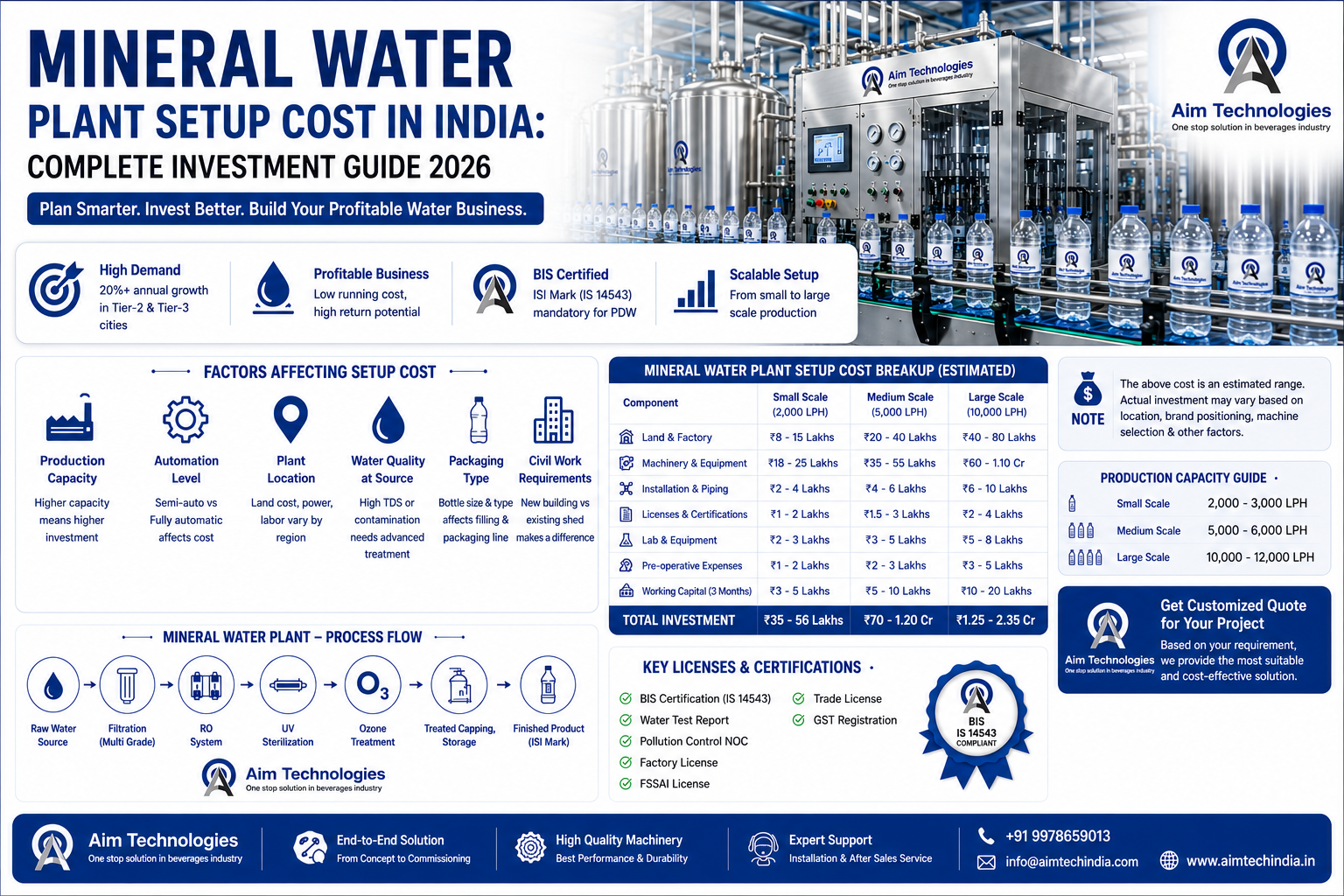
| Cost Component | Small Scale | Mid Scale | Large Scale |
|---|---|---|---|
| Land / Shed (lease setup or purchase) | ₹5L – ₹15L | ₹15L – ₹40L | ₹40L – ₹1Cr+ |
| Civil Work & Infrastructure | ₹8L – ₹15L | ₹15L – ₹30L | ₹30L – ₹60L |
| RO Water Treatment System | ₹4L – ₹10L | ₹10L – ₹18L | ₹18L – ₹24L+ |
| PET Blowing Machine | ₹9L – ₹18L | ₹20L – ₹45L | ₹45L – ₹1Cr |
| Water Filling Machine | ₹8L – ₹16L | ₹18L – ₹32L | ₹32L – ₹45L+ |
| Labeling Machine | ₹3L – ₹5L | ₹5L – ₹8L | ₹8L – ₹11L+ |
| Shrink Wrapping Machine | ₹3.5L – ₹8L | ₹10L – ₹18L | ₹18L – ₹30L |
| Batch Coding Machine | ₹2L – ₹4L | ₹4L – ₹7L | ₹7L – ₹10L |
| In-house Laboratory | ₹1.5L – ₹2.5L | ₹2.5L – ₹4L | ₹4L – ₹6L |
| Licences & Certifications | ₹1.5L – ₹3L | ₹3L – ₹5L | ₹5L – ₹8L |
| Working Capital (3 months) | ₹3L – ₹8L | ₹8L – ₹20L | ₹20L – ₹50L |
Pulling all of the above together, here's a realistic picture of total water bottling plant cost in India by scale:
Small Scale Plant (500–1,500 LPH output): Total investment typically falls between ₹35 lakh and ₹75 lakh. This is the entry point for a serious, BIS-certified commercial operation. It's a manageable investment for a first-time entrepreneur with a mix of own funds and a bank loan.
Mid Scale Plant (3,000–6,000 LPH output): Total investment in the range of ₹80 lakh to ₹1.5 crore. At this scale, the unit economics start to get genuinely attractive — revenue per shift increases significantly while fixed overheads don't grow proportionally.
Large Scale Plant (8,000–15,000+ LPH output): Total investment from ₹1.5 crore to ₹3.5 crore and above. This is a commercial-scale operation with multi-shift potential and the ability to supply large institutional, hospitality, or distribution contracts.
A word of caution on these ranges: they reflect machinery and infrastructure costs from credible suppliers, realistic civil work estimates, and proper compliance budgets. If someone quotes you a complete 'BIS-certified plant' for ₹12 lakh, ask very hard questions about what is and isn't included.
There's a smart way to manage capital in this business — and a dangerous way. Here's what actually works in 2026:
This is the question behind every investment question — and it deserves a straight answer.
For a small-scale plant in 2026, the cost to produce a 1-litre PET bottle of packaged drinking water — including water treatment, packaging materials, labour, electricity, and amortised machinery — typically runs between ₹4 and ₹7 per bottle depending on your location and efficiency. The wholesale selling price of a 1-litre bottle is generally in the range of ₹8 to ₹14 depending on your market and brand positioning.
That gives you a gross margin of ₹3 to ₹8 per bottle before distribution costs and overheads. At a production volume of 5,000 to 8,000 bottles per shift, the math starts to look quite compelling.
The 20-litre jar segment has different economics — higher revenue per unit, lower unit production cost, and strong demand from residential water delivery services, offices, and institutions. Many plant owners in 2026 find the jar segment generates better margins than retail bottles, especially in urban markets.
The honest answer is: yes, if you set it up correctly.
The demand side is strong and getting stronger. India's packaged drinking water market is projected to grow well past ₹50,000 crore in 2026 and beyond. Urban consumers are increasingly willing to pay for safe, quality water. Rural demand is growing as health awareness spreads. Institutional demand from hospitality, hospitals, corporate offices, and events is consistent and high-volume.
The businesses that struggle are usually the ones that either underestimated their setup cost and ran out of working capital, or invested in machinery without building a distribution network first. The product sells itself — but only if it's in the right places.
Build your distribution relationships before you start production. Identify your retailers, distributors, hotels, or institutional buyers. Know your sales pipeline before the first bottle comes off the line. That single discipline — which has nothing to do with machinery — is what separates profitable plants from struggling ones.
A. A realistic minimum for a small-scale, BIS-certified packaged drinking water plant in 2026 — including machinery, civil work, lab setup, licences, and 2 months of working capital — is approximately ₹35 lakh to ₹50 lakh. Projects quoted significantly below this range should be examined carefully for what has been omitted.
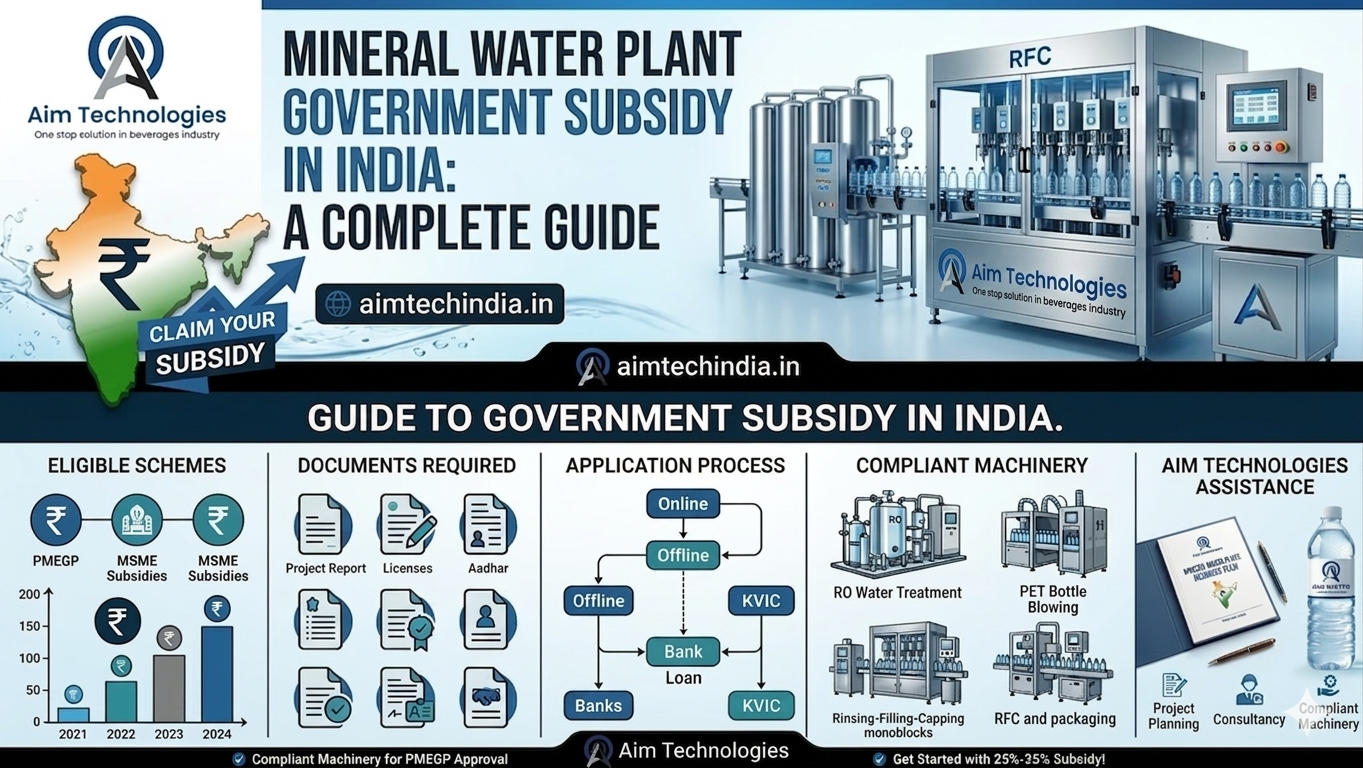
A. Yes. Under PMEGP, you can get 25% to 35% of your project cost as a non-repayable capital subsidy (up to ₹50 lakh project cost for manufacturing units). CGTMSE provides collateral-free loan coverage up to ₹2 crore. Several state governments also offer additional capital and interest subsidies on top of central schemes. MSME Udyam registration is the prerequisite for all of these. For a detailed breakdown, see our guide on Mineral Water Plant Government Subsidy in India.
A. A complete reverse osmosis water treatment system for a packaged drinking water plant — including sand filter, carbon filter, RO membranes, UV unit, and ozone generator — ranges from approximately ₹4 lakh for smaller-capacity systems to ₹24 lakh and above for high-capacity commercial setups. The right configuration depends on your source water quality and production volume.
A. Both approaches are viable. Buying pre-formed bottles from an external supplier is a lower-capex way to start. Manufacturing your own bottles with a PET blowing machine gives you better cost control, quality control, and eliminates storage and logistics issues at higher volumes. Most serious operators bring bottle production in-house once their daily output consistently justifies the investment.
A. Yes, absolutely. BIS certification under IS 14543 is legally mandatory for any business selling packaged drinking water in India. You also need an FSSAI licence, a Pollution Control Board NOC, a factory licence, and groundwater permission if you're drawing from a borewell. BIS and FSSAI are independent requirements — one does not substitute for the other.
A. A realistic timeline from project planning to first commercial production is 10 to 14 months when you factor in civil work, machinery lead times, installation, BIS lab testing, inspection, and certification. The BIS certification process alone — from application to ISI mark issuance — typically takes 4 to 6 months.
A. A well-run small-scale plant producing 10,000 to 15,000 litres per day can generate net monthly profit of ₹50,000 to ₹1.5 lakh once it reaches steady-state distribution. Mid-scale plants with established distribution networks and a mix of retail and institutional customers typically generate ₹2 lakh to ₹5 lakh per month in net profit in 2026.
A. Yes — and there are real advantages to doing so. Land costs are significantly lower. State and central subsidies are often higher for rural or backward-area locations — PMEGP gives 35% subsidy for rural units versus 25% for urban. Labour costs are lower. The competitive landscape is less crowded. The main challenge is distribution, which takes planning but is very achievable.
A. Natural mineral water (IS 13428) comes from a specific underground source with natural mineral content. Packaged drinking water (IS 14543) is tap or borewell water purified through RO and treated to meet BIS standards. Most commercial water plants in India operate under IS 14543. The setup costs discussed in this guide apply primarily to IS 14543 operations.
A. There is no single best state — it depends on where your target market is, land costs, state-level industrial subsidies, power availability, and raw water quality. States like Gujarat, Maharashtra, Uttar Pradesh, Rajasthan, and Tamil Nadu have established MSME support infrastructure. Hilly states like Uttarakhand and Himachal Pradesh offer very high subsidy rates but may have distribution challenges. The best state is the one where your market access, raw material costs, and financial incentives together give you the best unit economics.
The mineral water plant setup cost in India isn't a single number — and any guide that tells you otherwise is oversimplifying a decision that deserves proper planning.
What this guide gives you is a realistic framework for 2026: understand the variables that affect your specific project, budget for every component (not just the machinery), secure your compliance certifications before commercial launch, and build your distribution before you build your production line.
The business itself is sound. Demand is strong. Margins are workable. Government support is genuinely available. The entrepreneurs who succeed in this industry are the ones who plan carefully, invest in the right machinery from credible manufacturers, and approach the market with a distribution-first mindset.
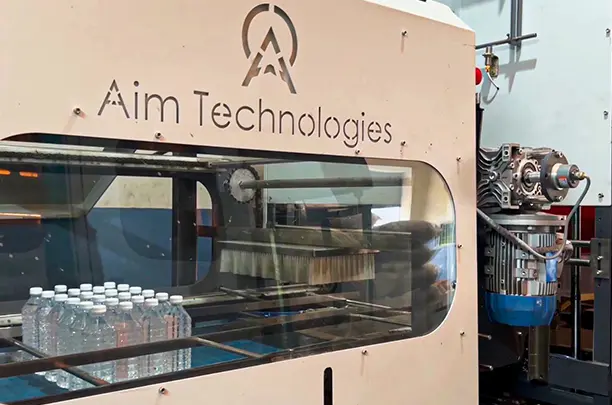
If you're ready to move from planning to action, the next step is getting a detailed project report and machinery quotation tailored to your specific production target, location, and budget. Aim Technologies has been manufacturing and supplying complete turnkey mineral water plants from Surat, Gujarat since our establishment. We are ISO and CE certified, and we have commissioned plants across India and internationally.
Contact us today for a free consultation and project cost estimate — call +91 99786 59013 or write to info@aimtechindia.in.

Subscribe To Our Newsletter to get the latest news, updated and amazing offers delivered directly in your inbox.
For More Details Call Us :