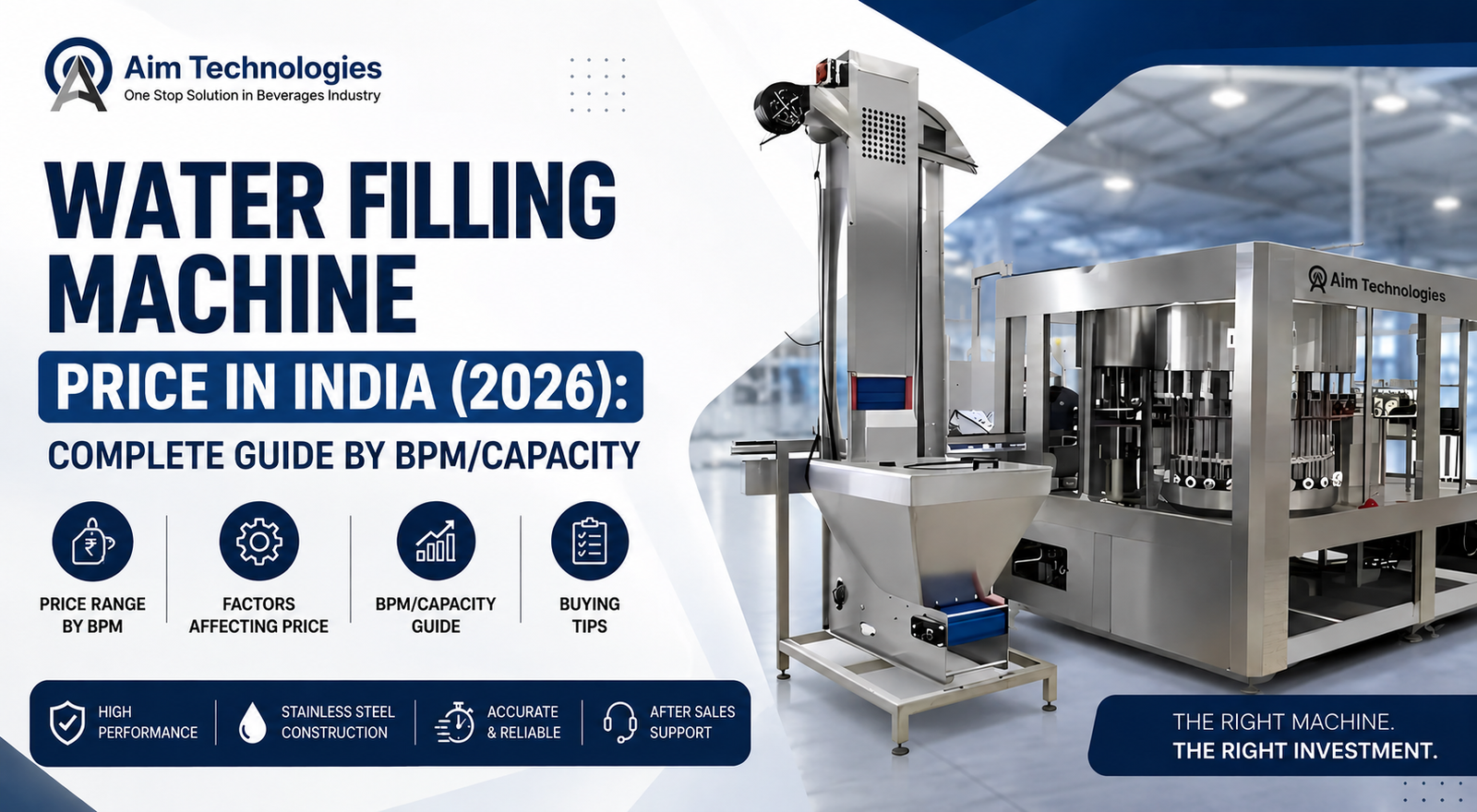
Spend even a week researching Water filling machine and you'll run into the same frustration everyone else does: every supplier quotes a different number for what sounds like the exact same machine. One vendor says ₹1.5 lakh. Another says ₹8 lakh. A third won't tell you anything until you fill out a form and wait for a callback. Nobody's lying to you here — they're just describing different machines that happen to share a name.
So let's actually sort this out. This guide walks through why the water filling machine price swings so much, what really pushes the cost up or down, and roughly what you should budget depending on your BPM (bottles per minute) requirement. Doesn't matter if you're setting up a small Mineral water plant in a Tier-2 town or scaling toward a full export-ready bottling plant — the same logic applies, just at different scale.
At its core, a water filling machine takes empty bottles, fills each one with a precise, pre-set amount of water, and — on most modern setups — caps them too, all as part of one continuous line. The good ones don't just pour water and hope for the best. They measure it using a Programmable Logic Controller (PLC), so every bottle comes out consistent to the millilitre instead of some being overfilled and wasting product.
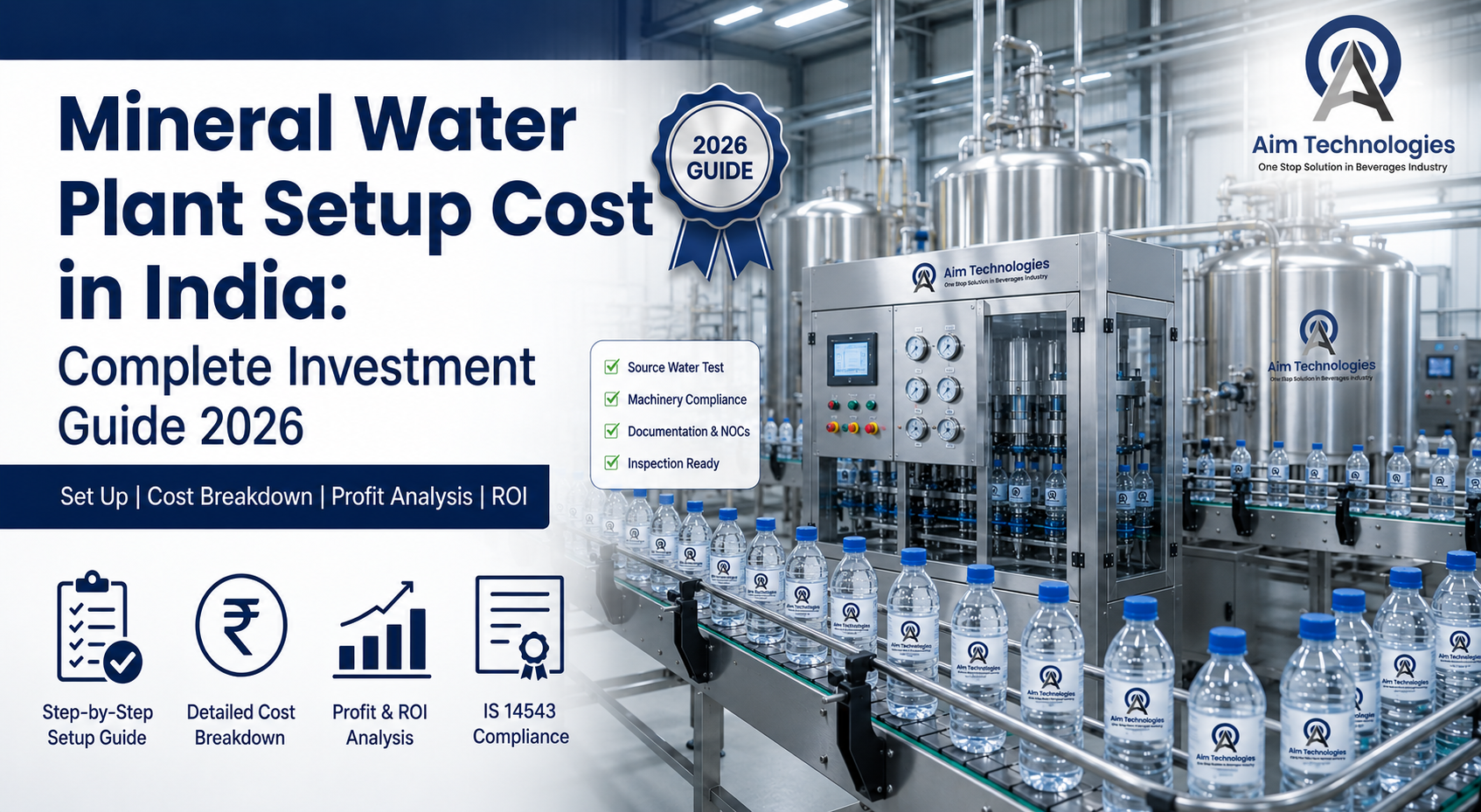
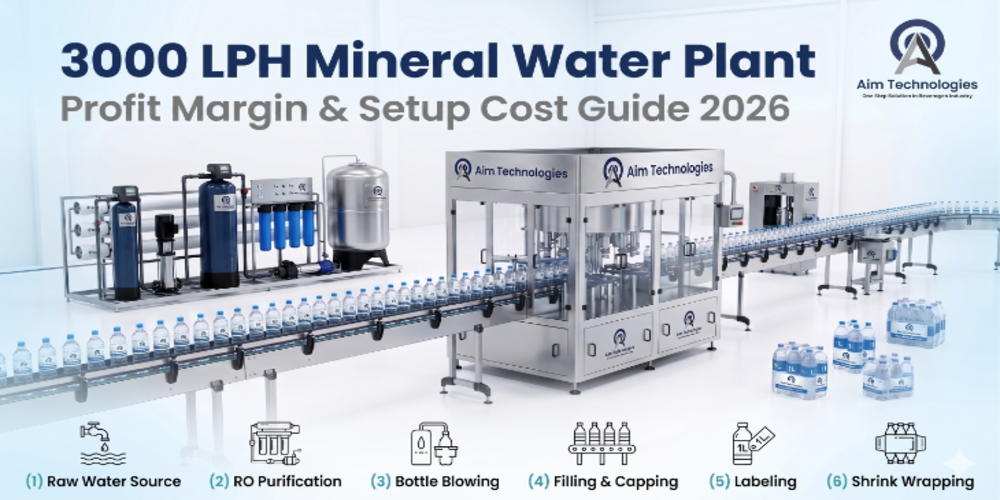
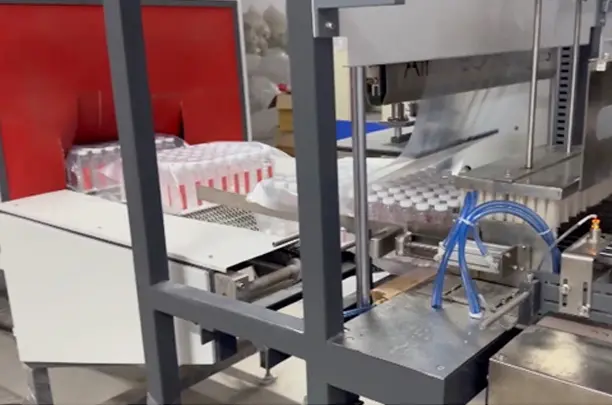
Picture the line in your head: bottles come in on a conveyor, get a quick rinse, pass under the filling nozzles, then move straight into a capping station before heading off to be labelled and packed. Sometimes that whole sequence lives inside one machine. Sometimes it's spread across a few connected units. Depends entirely on how much automation you're paying for.
Here's where a lot of buyers get tripped up, honestly: a "water filling machine" quoted at one price might only fill. Another one at nearly double the price includes rinsing, filling, and capping bundled together. Before you compare two quotes side by side, check what's actually included in each — because they might not be the same product at all.
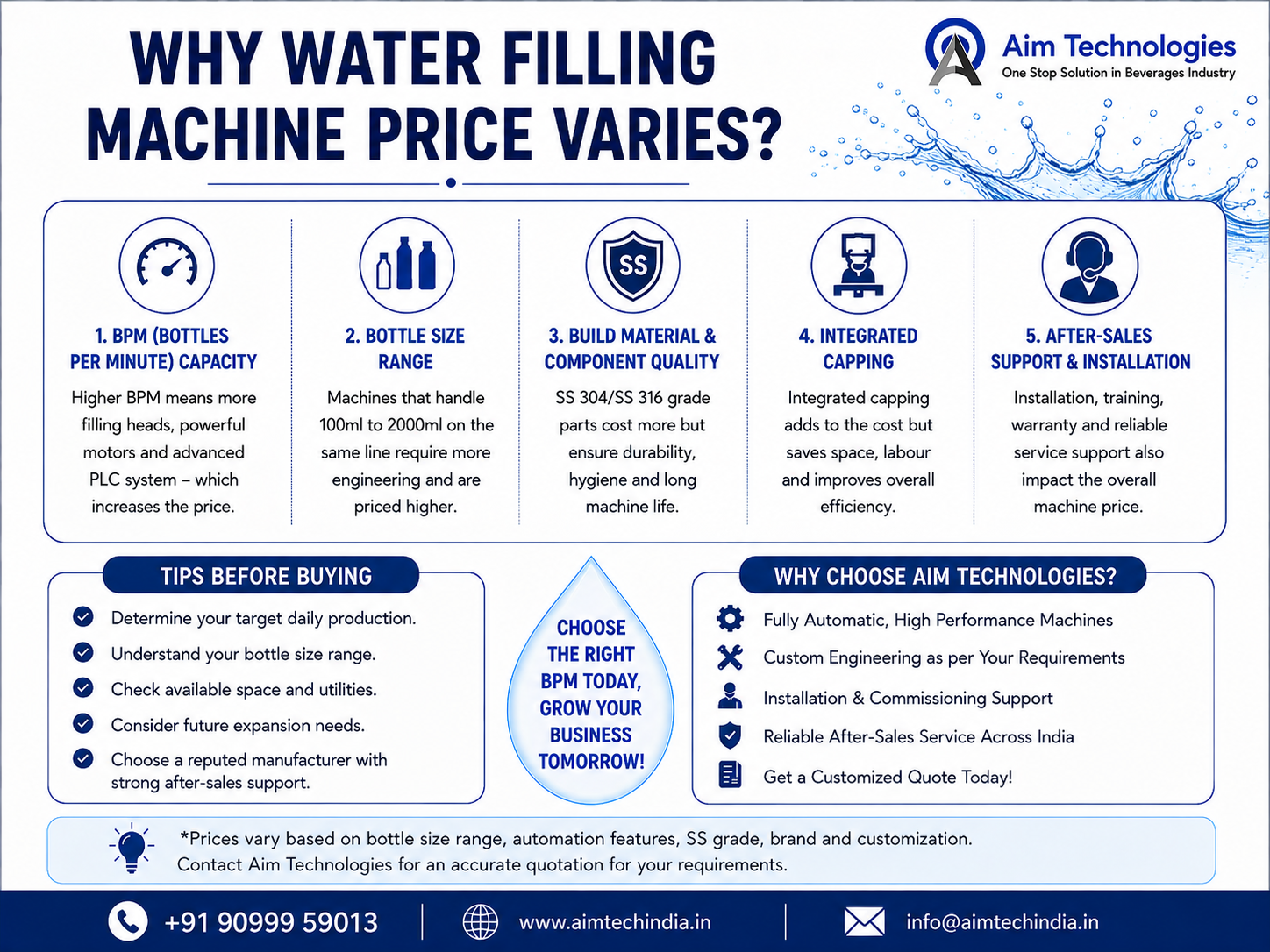
There's no single, fixed "price of water filling machine" you can point to. Here's what actually moves the number.
This one matters more than anything else on this list. BPM tells you how many bottles the machine fills per minute, and that number is tied directly to the machine's size, how many filling heads it has, the strength of its motor, and how complex the PLC system running it is. A 40 BPM Water filling machine and a 200 BPM Water filling machine aren't just different sizes of the same thing — they're built for completely different scales of business.
A machine built only for 100ml bottles is a simpler piece of engineering than one that can handle everything from 100ml up to 2000ml on the same line, without needing a full mechanical changeover in between. That flexibility isn't free — it adds both complexity and cost.
Stainless steel contact parts (SS 304 or SS 316 grade) cost more upfront than cheaper alternatives, but they last a lot longer and actually meet food-and-beverage safety standards. Machines that cut corners here tend to show it later — corrosion, contamination risk, parts wearing out faster than they should.
Some machines only fill. Others fill, cap, all in one pass. Every extra function bundled in adds to the price, but it also means fewer separate machines cluttering your floor — and fewer separate things that can break down.
A manufacturer who throws in installation, operator training, and a proper service warranty isn't offering the same deal as one who ships the machine and disappears. That's a real cost difference, even if it never shows up as a separate line on the invoice.
Since exact pricing depends on automation level, bottle range, and brand, here's a realistic price band by capacity — reflecting what buyers in India typically run into when sourcing from established manufacturers.
| BPM Capacity | Typical Use Case | Automation Level | Approximate Price Range |
|---|---|---|---|
| 40 BPM | Small to mid-scale mineral water units, startups | Fully Automatic | Custom Quote |
| 60 BPM | Growing local bottling businesses | Fully Automatic | Custom Quote |
| 90 BPM | Larger regional production | Fully Automatic | Custom Quote |
| 120 BPM | High-volume commercial plants | Fully automatic | Custom Quote |
| 200 BPM and above | Large-scale / export-oriented plants | Fully automatic with PLC integration | Custom Quote |
A quick word of caution: treat this table as a planning reference. The real number for your requirement shifts based on your bottle size range (going from 100ml capability to 2000ml capability adds cost), whether capping comes integrated, the SS grade used, and honestly, which manufacturer you end up buying from. Two "60 BPM Water Filling Machine" from two different manufacturers can carry very different price tags depending on what's actually built into them.
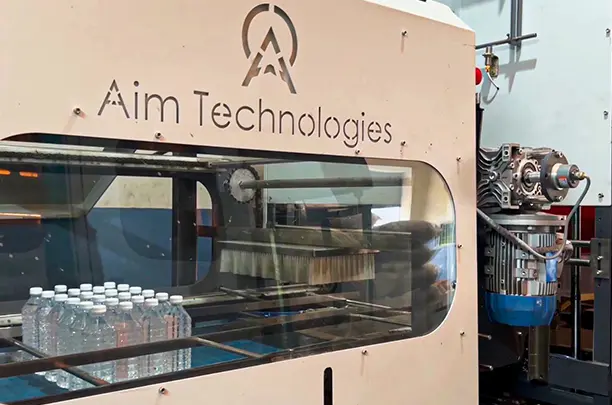
If you want an accurate estimate for your production requirements, talk to the experts at AIM Technologies. We help businesses choose the right water filling machine, mineral water bottling plant, and complete packaging solution based on production capacity, bottle size, and budget. Contact us today for a free consultation and a customized quotation.
Picking a BPM tier isn't about grabbing the biggest number on the price list — it's about matching the machine to what your production line actually needs, today and over the next year or so. Here's how the fully automatic range typically breaks down.
A simple way to narrow it down: line up your current daily bottle requirement against these tiers, then add roughly 20-30% headroom for near-term growth — not five years out, just what you can reasonably expect over the next year. That's usually enough to land on the right BPM without paying for capacity you won't touch for a while.
A good number of first-time buyers search specifically for a Fully Automatic water filling machine price, simply because they're not ready to commit to a full-scale production line yet. Fair enough — that's a completely reasonable place to start.
Small-capacity machines are generally built with a smaller frame, fewer filling heads, and simpler control systems compared to their higher-BPM counterparts. That keeps both the purchase price and the floor space requirement manageable for a business that's just getting off the ground. You'll see these used a lot by local packaged drinking water units, small mineral water brands testing a new market, or businesses that would rather scale gradually than sink a large amount of capital in upfront.
The trade-off is pretty simple: lower output per hour, and often more manual involvement in loading and unloading bottles compared to a fully automatic line. For a business producing a modest daily volume, that's not really a downside — it just means the machine matches the business, which is exactly how it should work in the early stages.
One thing worth checking even at this point: ask the manufacturer whether the smaller machine can be upgraded or paired with additional units later, or whether scaling up means replacing it outright. Knowing that upfront helps you decide whether to go with the smallest option available or start one tier higher, leaving yourself a bit of room to grow without a full re-purchase down the line.
This step gets skipped more often than it should, and honestly, it's one of the more useful things you can do before finalising a machine.
Start with your target daily production in bottles. Divide your total investment — machine price plus the hidden costs covered below — across the expected working life of the machine, factoring in your daily or monthly output. That gives you a rough per-bottle cost contribution from the equipment alone, separate from your raw material and packaging costs.
From there, add your estimated labour cost per shift, divided by the number of bottles that shift produces. A fully automatic machine needing just one operator will have a noticeably lower labour cost per bottle than a manual setup needing two or three people to keep pace — even though the manual setup looked cheaper on day one.
Last piece: factor in expected downtime and maintenance cost over a year, spread across your annual bottle output. Machines built with better components and backed by stronger after-sales support tend to score lower here, which is a big part of why two machines with identical price tags can end up costing very different amounts once you look a year or two ahead.
Even a rough version of this calculation tends to change which machine looks like the "better deal." It's a conversation worth having directly with your shortlisted manufacturers too — they can usually walk you through realistic numbers based on machines they've already installed for businesses similar to yours.
The machine price is really just one line item in your total setup cost. Skipping this part is exactly where a lot of first-time buyers get caught off guard later.
Factor these in early and you get a far more realistic total investment figure than just looking at the machine price in isolation — and you avoid the common trap of underestimating your working capital needs right after making the biggest purchase.
The honest answer to "what does a water filling machine cost" is: it depends entirely on what you need it to do. A 40 BPM water filling machine unit for a small local bottling business and a 200 BPM fully automatic water filling machine line for an export-focused plant are solving two completely different problems. Pricing them the same way would just be misleading.
Before you request quotes, get clarity on three things: your target daily output in bottles, the range of bottle sizes you'll actually be filling, and whether you've got the labour to run a Fully automatic water filling machine setup or genuinely need full automation instead. Walk into a conversation with a manufacturer armed with those three answers, and you'll get a far more accurate, useful quote than you would just asking "what's your price" and hoping for the best.
Still comparing your options? It's worth reaching out directly to a manufacturer with your specific production requirement — BPM, bottle size range, expected daily volume — so the quote you get back actually reflects your business instead of pulling from a generic price list.
A. Generally, yes. Higher-capacity machines need more floor space for the conveyor system, filling heads, and capping station. Worth checking your factory layout against the machine's floor dimensions before you finalise anything.
A. Many mid-to-high-end machines are built to handle a range — say, 200ml to 2000ml — on the same line with only minor adjustments. Ultra-flexible ranges do tend to cost a bit more than fixed-size machines, though.
A. Well-maintained machines with decent SS components commonly run for 10-plus years — though filling nozzles and other wear parts will still need periodic replacement no matter how good the build quality is.
A. This one varies a lot by manufacturer. Get it confirmed in writing before comparing two quotes, because a lower headline price with separate installation charges tacked on can end up costing more overall.
A. Depends on whether the machine's in stock or built to your specific configuration — and it varies by manufacturer. Customised setups involving particular bottle sizes or added features usually take longer than a standard off-the-shelf model, so confirm this upfront so it doesn't collide with your production launch date.

Subscribe To Our Newsletter to get the latest news, updated and amazing offers delivered directly in your inbox.
For More Details Call Us :